


Article
New Images Show Armstrong After Gemini VIII Emergency
By: Logan Rex | March 22, 2026 (4-minute read)
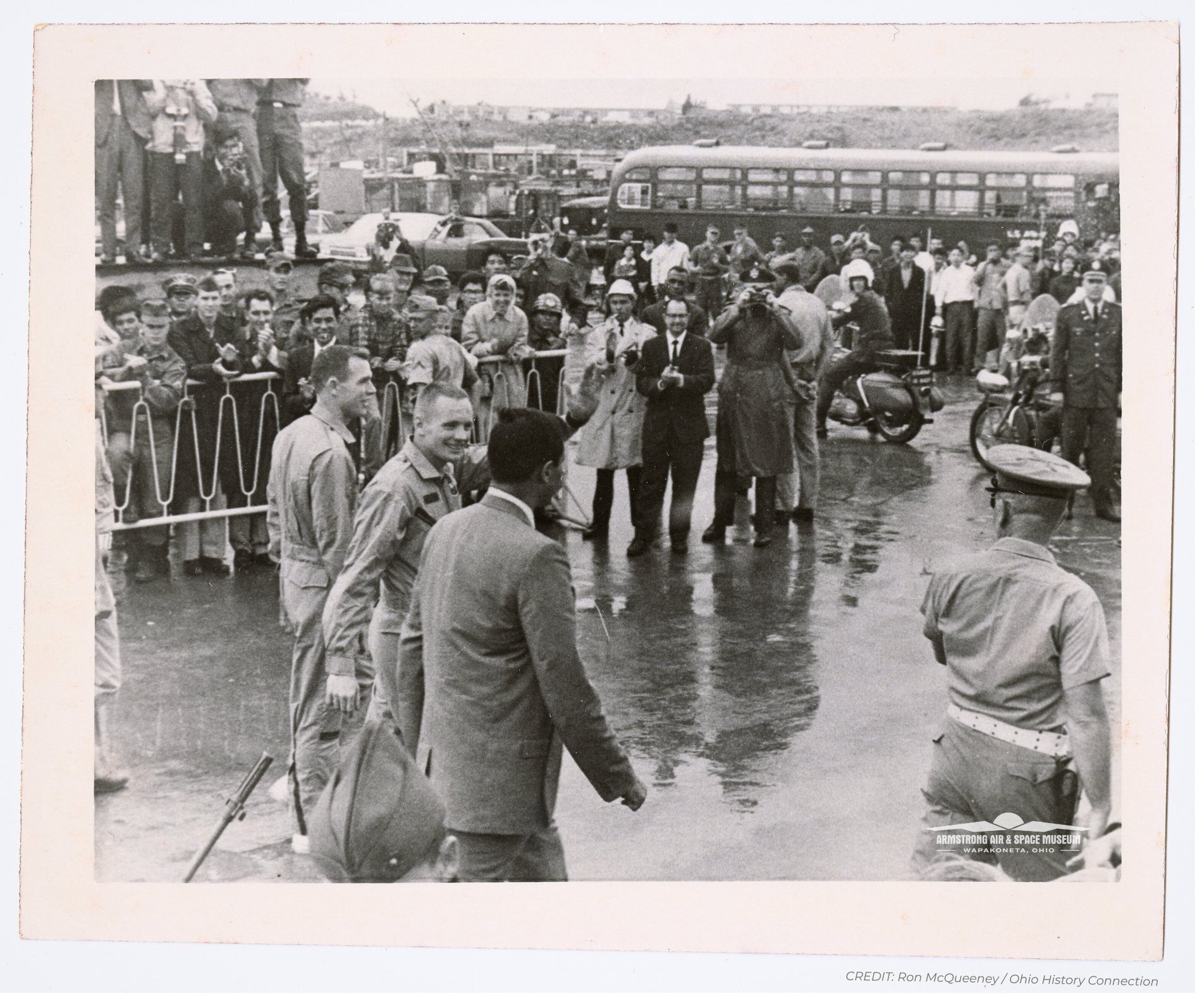
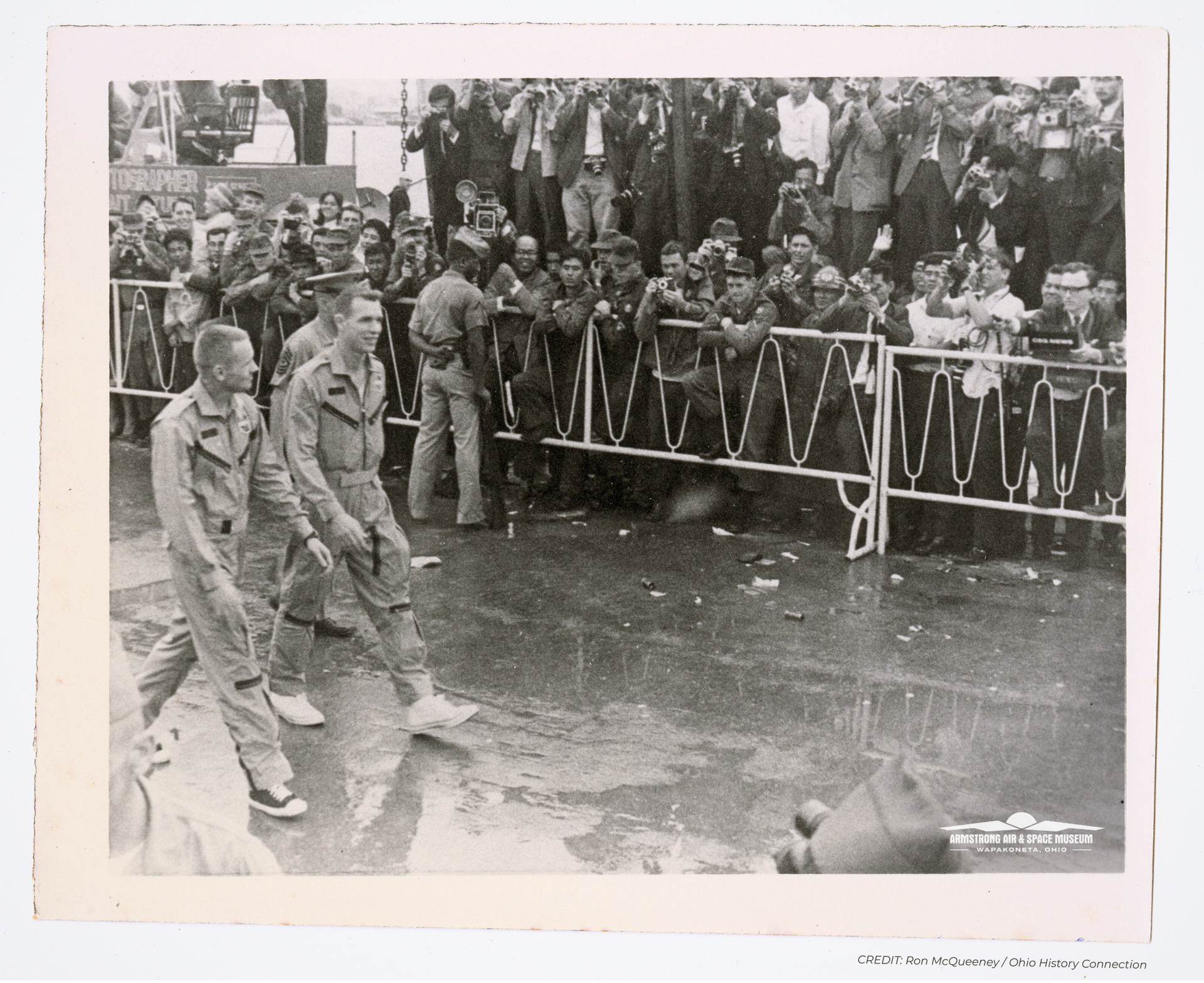
Wapakoneta, OH — In March 1966, only hours after surviving one of the most dangerous inflight emergencies of the early space program, NASA astronauts Neil Armstrong and David Scott stepped off of the USS Leonard F. Mason and onto the docks of Naha Air Base in Okinawa, Japan. Instead of distressed, the astronauts were seen relaxed, smiling, and waving to a small crowd that had gathered to welcome them. No visible trace of their narrow escape from catastrophe. Now, six decades later, a new series of photographs taken in those telling moments are being seen publicly for the first time.
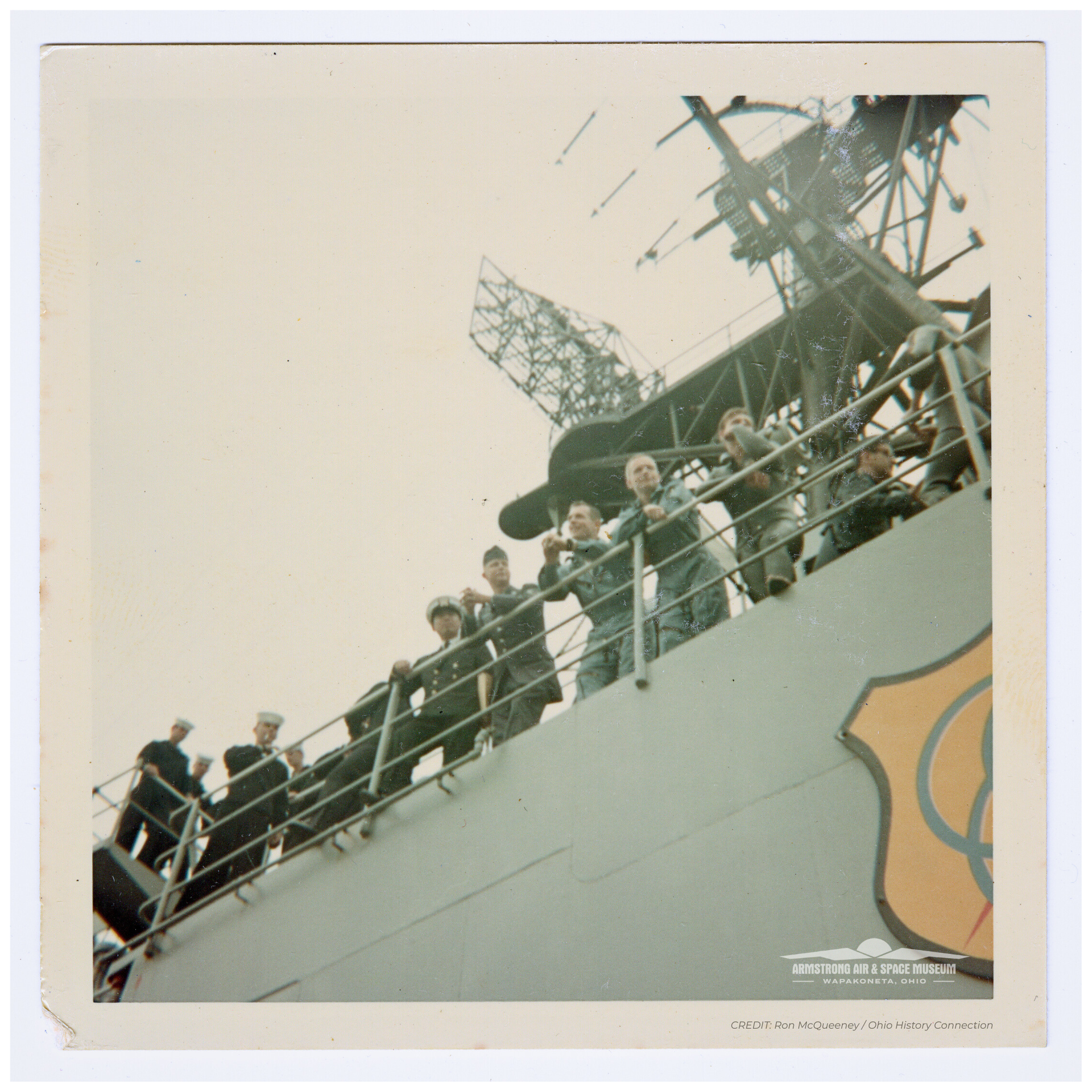
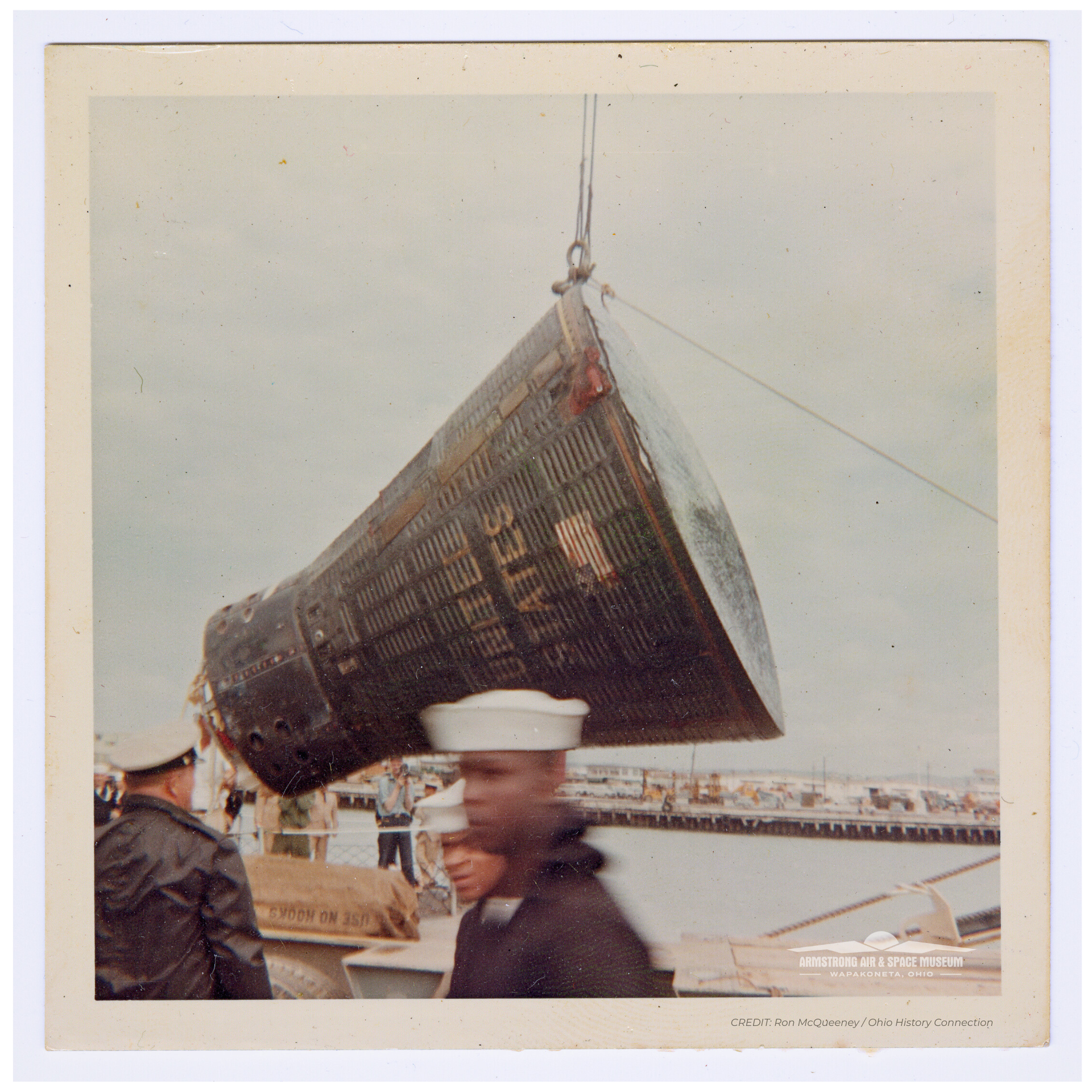
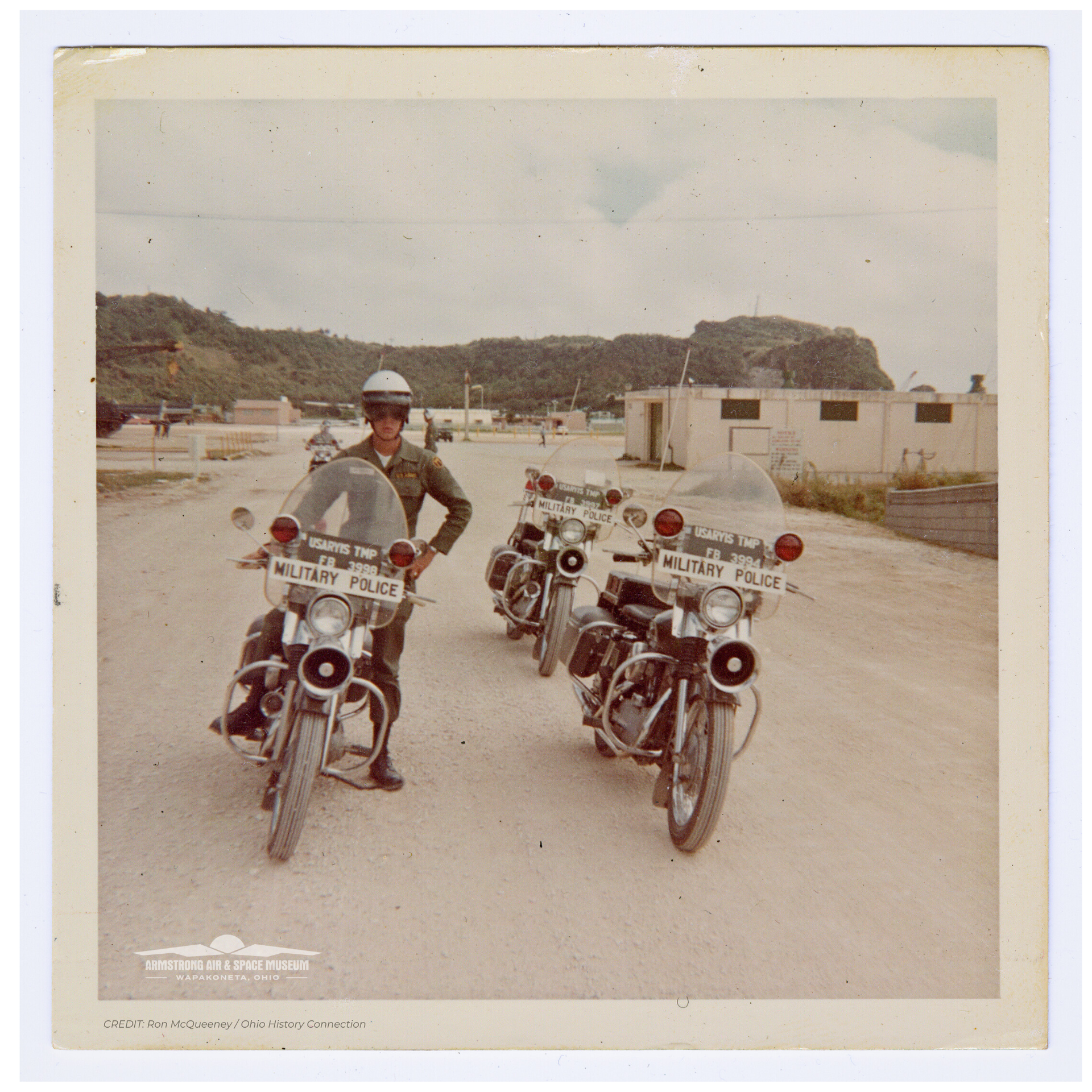
The previously unpublished images were given to the Armstrong Air & Space Museum as part of the Gemini VIII 60th anniversary. The images were captured by Ron McQueeney, a military police officer tasked with escorting the astronauts and spacecraft around the island. The photographs capture key moments including the astronauts disembarking the ship, waving to well-wishers, as well as the capsule and the other escorting military personnel.
A mission that nearly ended in disaster
Launched on March 16, 1966, Gemini VIII was intended to be NASA's first full spectrum mission, including a spacewalk, precision landing, orbital rendezvous, and the world's first docking of two craft in space, a crucial step towards a lunar landing mission. Armstrong and Scott, both on their first space mission, were successful on the rendezvous and docking. But triumph quickly turned into crisis. A malfunctioning thruster on the Gemini caused the spacecraft to begin an uncontrolled spin. With the source of the roll unknown to the astronauts, the pair decided to undock, a decision that caused the roll rate to increase to one revolution per second. The astronauts only had several minutes before they would lose consciousness and perish.
Armstrong, known for his calm demeanor in high pressure situations, quickly diagnosed the problem. He shut down the spacecraft's primary control system and activated the reentry thrusters, equipment intended only for returning through Earth's atmosphere. The maneuver worked but forced the astronauts to abort the rest of the mission. The three-day flight was reduced to 11 hours and an emergency splashdown. The astronauts, however, were alive.
Recovery and journey to Okinawa
The crew was originally scheduled to splashdown in the Atlantic Ocean, close to the Caribbean. Because of their early reentry, the astronauts splashed down in the Pacific Ocean, about 500 miles east of Okinawa, Japan. The capsule was spotted by recovery pilot Les Schneider and US Air Force Pararescuemen were deployed from an old World War II DC-4. The crew and capsule were brought aboard the USS Leonard F. Mason, a destroyer stationed in the area in case of an emergency landing.
Because the astronauts were expected to land in the Atlantic, media presence in Okinawa was minimal. Emergency splashdowns had never occurred during a space mission, and many personnel at Naha Air Base had little time to prepare for the arrival. It was this unexpected moment that Ron McQueeney was able to document. Assigned to escort Neil Armstrong, David Scott, and the Gemini capsule during their transit across Okinawa, the amateur photographer captured a series of images showing the astronauts in their first moments back on land.
A closer look at the images
When Neil Armstrong was pulled from the Pacific by the USS Leonard F. Mason, it was more than just a routine rescue; it was a brush with home. The Korean War destroyer was named after Medal of Honor recipient Leonard Foster Mason, a native of Lima, Ohio. In a twist of fate, Mason’s mother was a close personal friend of Armstrong’s mother, Viola.
While the photos capture the triumph of the return, the reality on the water was grueling. Accounts of the splashdown describe heavy, choppy seas that battered the capsule. The conditions were so severe that both the astronauts and the Air Force Pararescuemen reported suffering from intense seasickness. Despite the physical toll, the atmosphere shifted once the crew reached Okinawa; the images show a pair of men clearly thrilled to be alive.
Looking at the crowd of people, many of the faces were service members stationed on the island. After the emergency, any reporter stationed in the Pacific attempted to make their way to Okinawa for the arrival. Major media outlets either made it days later to interview personnel close to the mission or they waited and hopped on a flight to Honolulu, the final Pacific stop for the astronauts before heading back to Houston.
A photographer's legacy
For decades, the images remained tucked away in McQueeney's personal collection, a small reminder of his brush with space history. After his military service, Ron became a professional photographer, spending more than 50 years at the Indianapolis Motor Speedway. "Ron's photographs offer such a unique perspective on such a rare moment," says Dante Centuori, executive director of the Armstrong Air & Space Museum. "They offer a human perspective on a moment that truly tested Neil Armstrong and David Scott's composure and skill. With the lack of immediate press coverage on the scene, this really does add some great context to a part of the mission that is seldom discussed."
Unfortunately, Ron McQueeney passed away in July of 2025, during the donation process. Knowing the importance of the photographs, Ron's wife graciously picked up where he had left off and finished the donation process with the Ohio History Connection, helping preserve the photos for future generations. These photographs are shown and preserved with his memory and story.
THE PHOTOGRAPHS:
CREDIT: Ron McQueeney/ Ohio History Connection
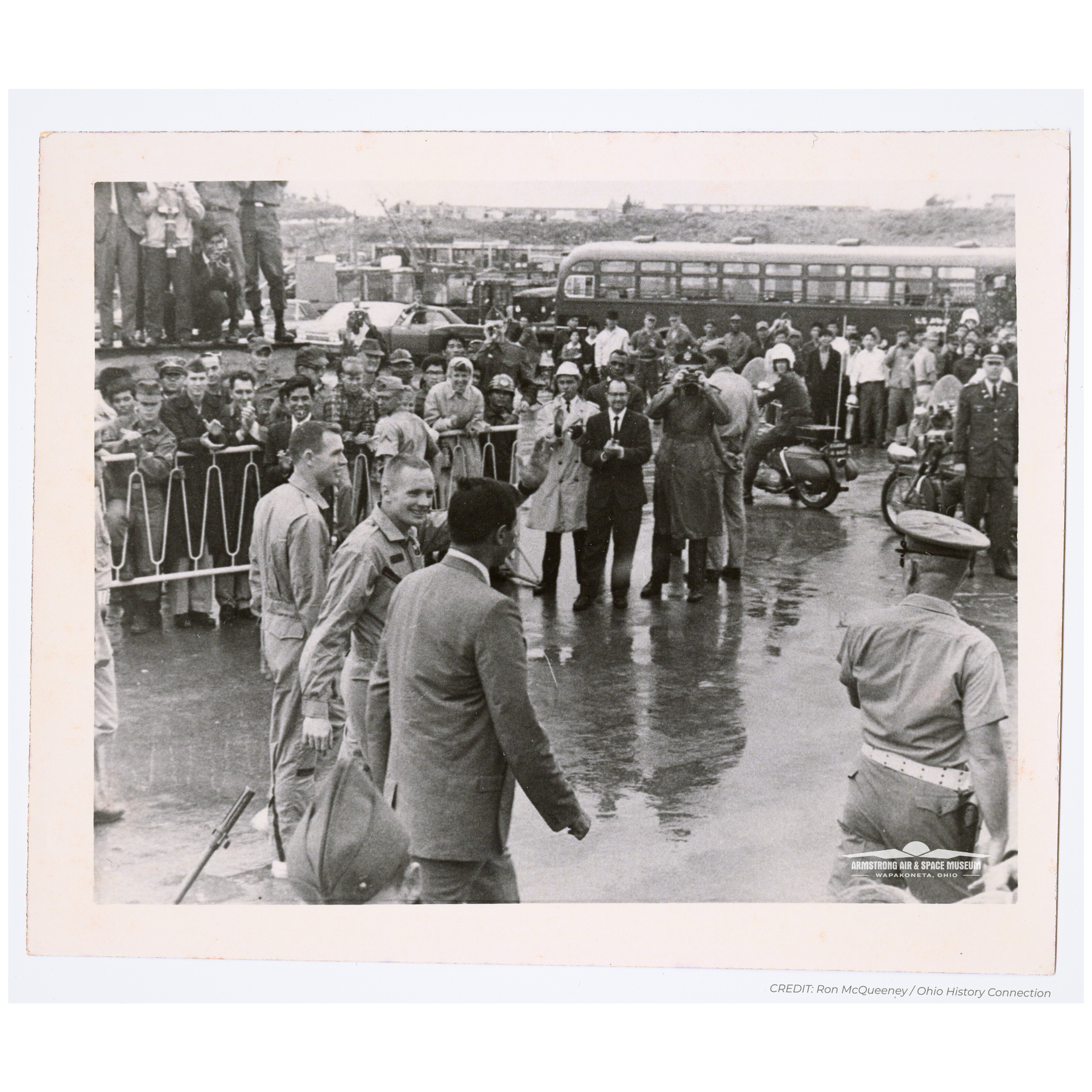
Astronauts Neil Armstrong, second from right, and David Scott, third from right, stand with unidentified personnel on the deck of the USS Leonard F. Mason at Naha Air Base in Okinawa, Japan, March 17, 1966. (Ron McQueeney/Ohio History Connection)
The Gemini VIII spacecraft is lifted from the USS Leonard F. Mason for transport at Naha Air Base in Okinawa, Japan, March 17, 1966. (Ron McQueeney/Ohio History Connection)
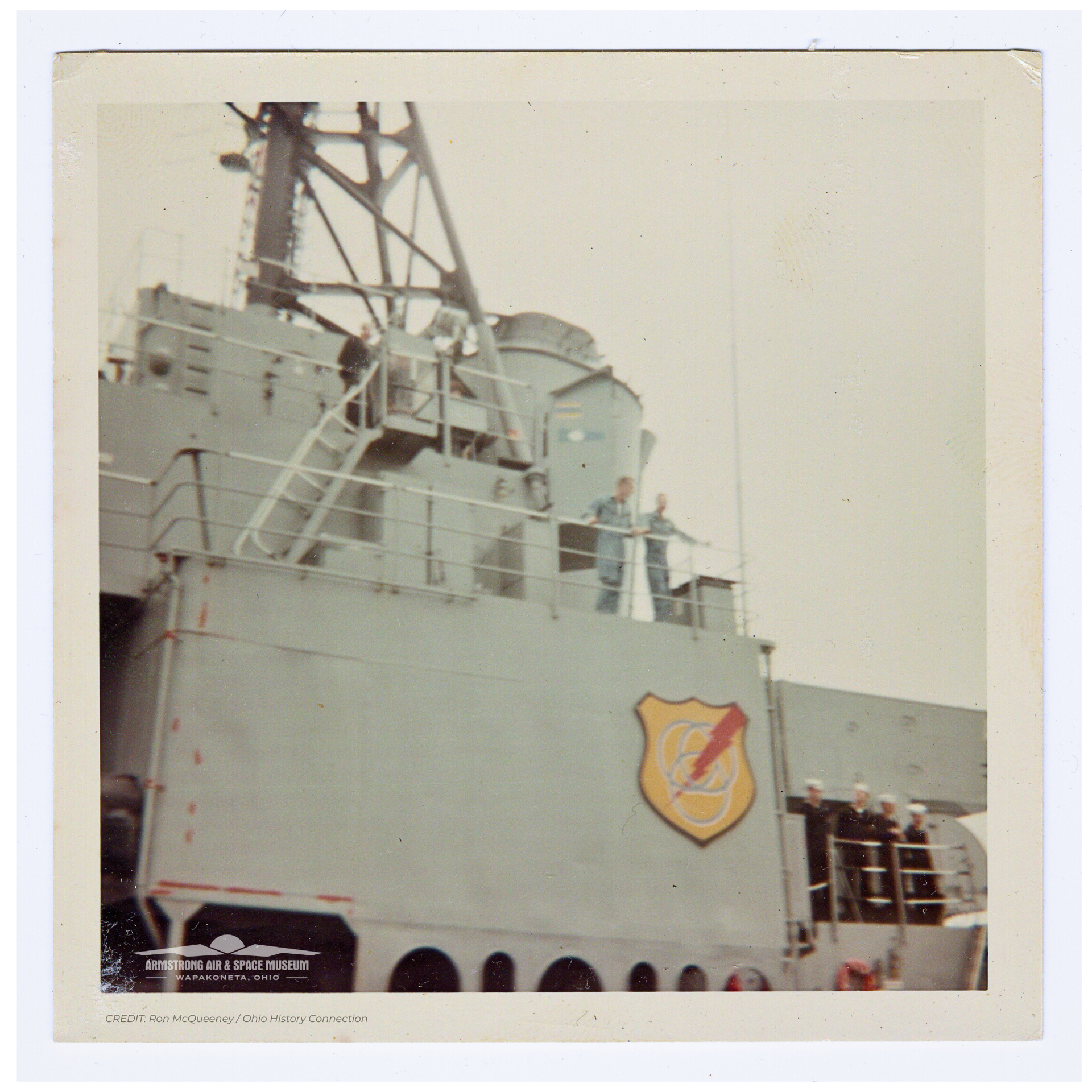
Crew members of Gemini VIII look out over Naha Air Base from the deck of the USS Leonard F. Mason following their emergency recovery, March 17, 1966. (Ron McQueeney/Ohio History Connection)
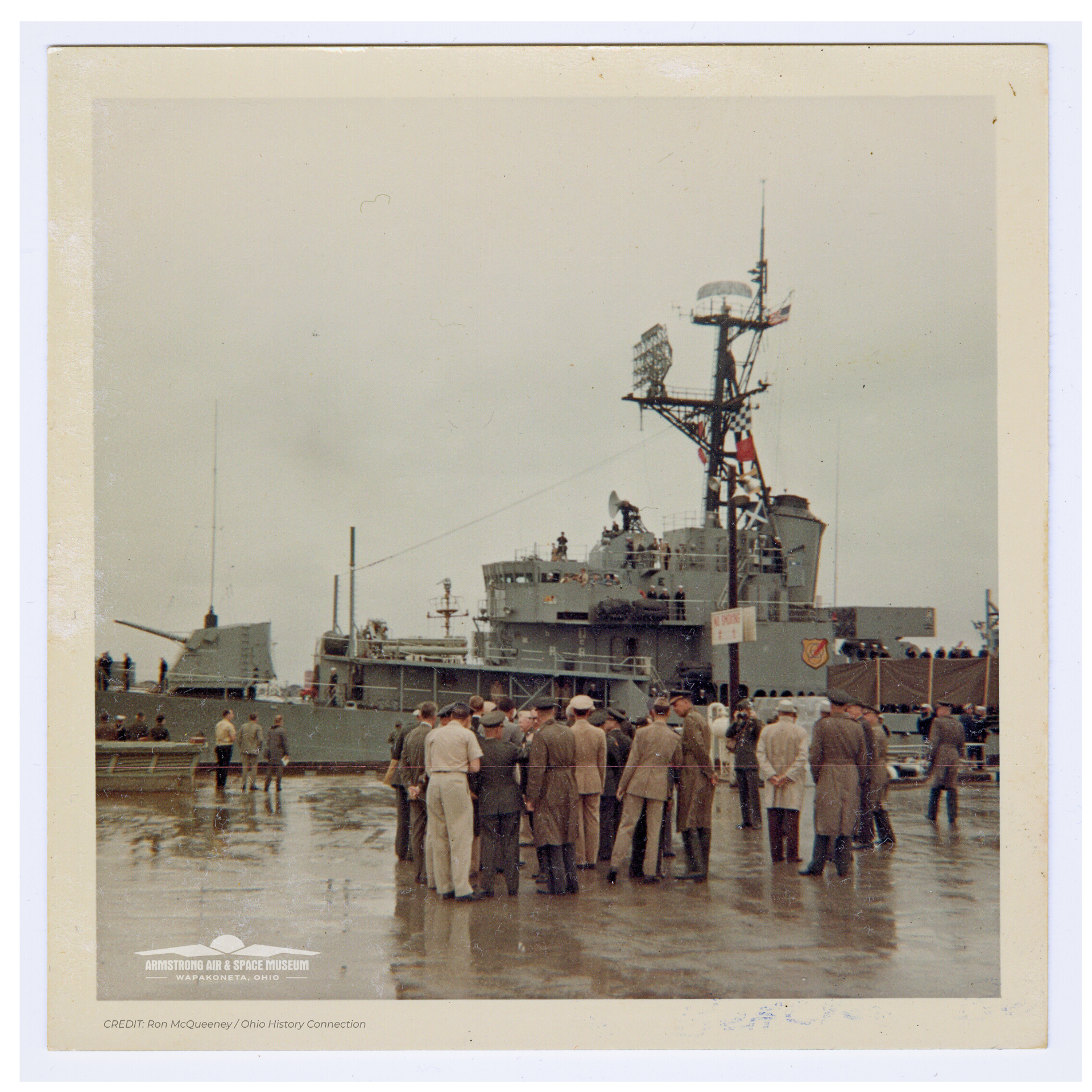
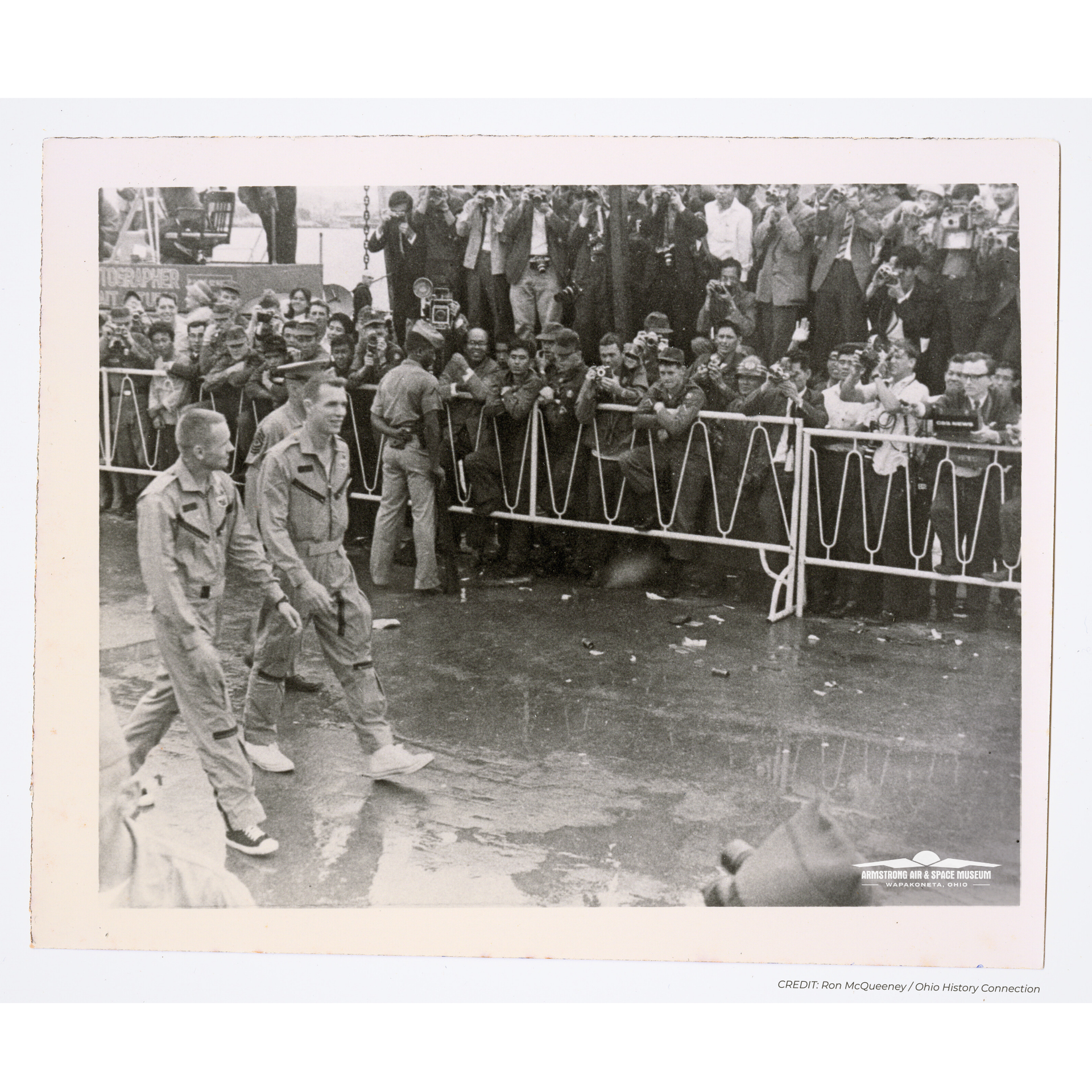
Astronauts Neil Armstrong (left) and David Scott walk through a crowd of U.S. service members after exiting the USS Leonard F. Mason at Naha Air Base in Okinawa, Japan, March 17, 1966. (Ron McQueeney/Ohio History Connection)
share this
Related Articles
Related Articles