


Article
Judith Resnik: A Trailblazing Legacy
By: Logan Rex | January 28, 2026 (4-minute read)
Wapakoneta, OH — This year marks the 40th anniversary of the Challenger disaster, a day that claimed the lives of seven American astronauts, including Ohioan Judith Resnik. For many, her name is perpetually linked to that tragic January morning on the cape. But to remember Resnik only through the lens of loss is a true disservice to the extraordinary life that came before it. Her legacy is not simply one of tragedy, it is the enduring impact of a pioneering scientist, astronaut, and role model whose influence continues to reach far beyond the launchpad.
A childhood of early excellence
Judith Arlene was born on April 5, 1949 in Akron, Ohio, to Dr. Marvin Resnik, an optometrist, and Sarah Polensky, a legal secretary. Resnik was raised in a proud Jewish household, her paternal grandfather being a Ukrainian rabbi. Judith grew up in an environment that valued education, discipline, and curiosity. From a young age, her talents were unmistakable. She demonstrated a exceptional intelligence, a deep love of learning, and a remarkable musical ability in the piano. Resnik was so talented, she even briefly considered a career as a professional pianist.
As early as kindergarten, her teachers quickly recognized her extraordinary abilities. Her academic performance set her apart from her peers. In high school, she achieved the rare distinction of earning a perfect score on the SAT, making her only the 16th woman in the nation to achieve such a milestone. It was an early sign of the remarkable path ahead.
The making of an engineer
Resnik began her college education at Carnegie Mellon University (then the Carnegie Institute of Technology), initially studying mathematics. It was while attending a lecture series that she discovered her true passion for electrical engineering. The field offered the challenge, complexity, and diverse opportunity she craved. She earned her bachelor's degree in the field and went to work at the Radio Corporation of America (RCA), working with her then-husband, Michael Oldak, gaining hands-on experience in advanced engineering.
After moving to Virginia, Resnik enrolled in graduate school at the University of Maryland, where she pursued a Ph.D. in electrical engineering. Her academic career intersected with groundbreaking research when she earned a fellowship in biomedical engineering at the National Institutes of Health, working in the Laboratory of Neurophysiology. There she contributed to vision science research, an area closely connected to her father's profession, studying electrical stimulation in the retina.
In 1977, she earned her doctorate with a dissertation on the bleaching kinetics of visual pigments, a highly advanced study of visual response and retinal stimulation. By her late twenties, Resnik had established herself as a formidable scientist and engineer, having a great background in research and study.
NASA's first female astronauts
In July 1976, NASA announced a historic shift, allowing women and minorities would be accepted into the upcoming astronaut class for the first time. The decision marked a turning point for the agency and for American spaceflight. Encouraged to apply, Resnik began preparing for one of the most competitive selection processes in the world. To strengthen her application, she earned her pilot’s license in 1977, scoring near-perfect marks on her flight examinations. Her academic credentials, research background, and technical mastery already set her apart, but she understood that excellence at NASA required both precision and adaptability.
From a pool of more than 8,000 applicants, Judith Resnik was selected as one of six women in Astronaut Group 8. The achievement placed her at the center of a historic transformation in the space program. Her selection wasn’t a symbolic gesture, but a corrective move to ensure NASA recruited from the broadest possible talent pool, regardless of gender or ethnicity.
Another Ohio trailblazer in space
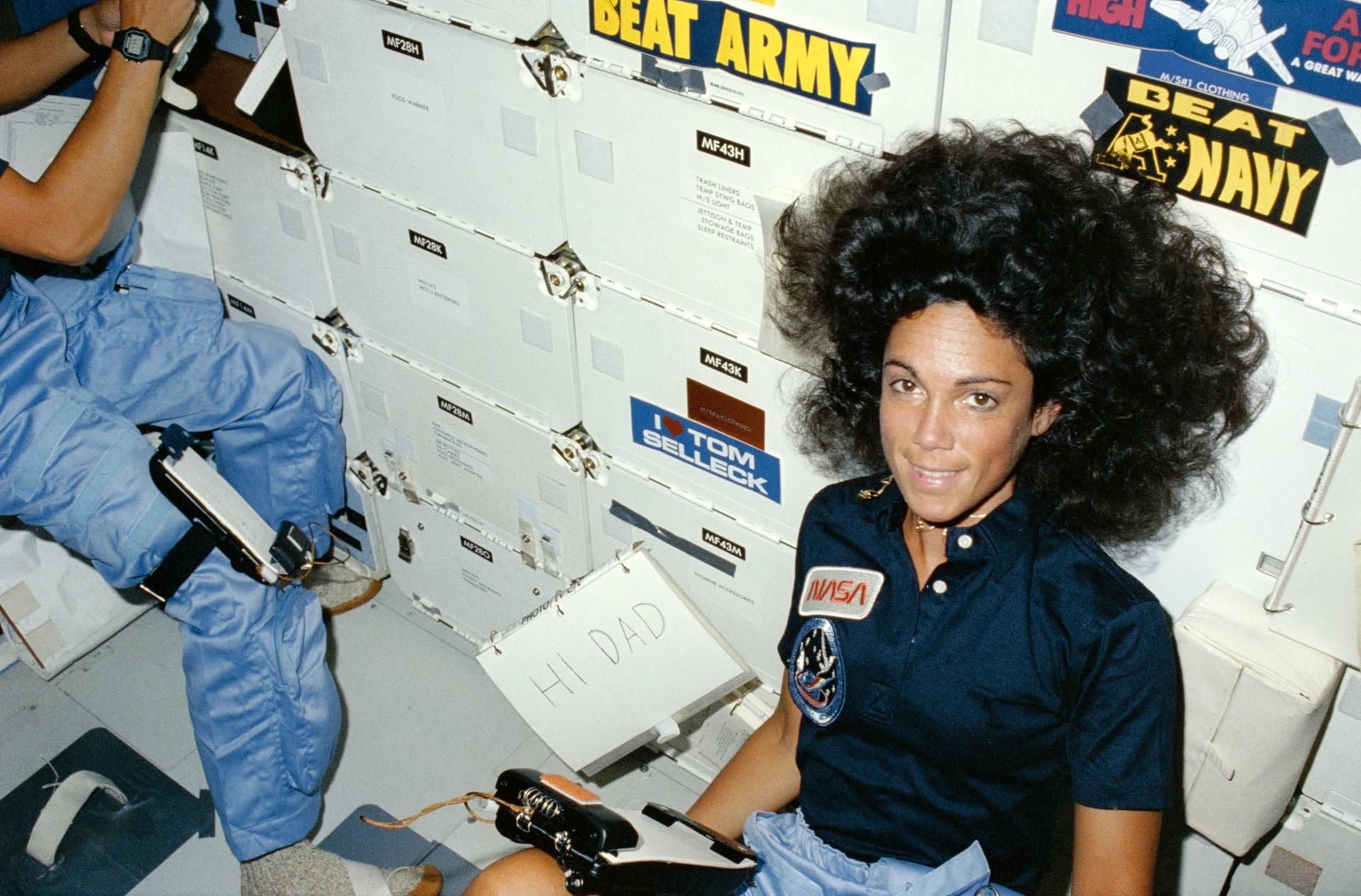
Once accepted into NASA’s astronaut program, Judith Resnik quickly became a vital force behind the scenes of America’s space shuttle era. She immersed herself in complex research on orbital systems, contributed to flight software development, and played a key role in the design and operation of the Remote Manipulator System, the shuttle’s robotic arm that would become essential to modern space missions. Her technical expertise, discipline, and precision earned deep respect within the astronaut corps.
When early crew selections began, Resnik was widely regarded as a leading candidate to become the first American woman in space. Ultimately, NASA selected Sally Ride for that historic milestone, a decision shaped by public-facing considerations. The agency wanted someone prepared for intensive media appearances, interviews, and public campaigns. Resnik, deeply committed to the science and engineering of spaceflight, was less drawn to that role, preferring the work of exploration itself over the spotlight.
Her moment came in 1984, when she flew aboard STS-41-D, becoming the fourth woman in space, the second American woman, and the first Jewish-American astronaut to leave Earth’s atmosphere. Serving as a mission specialist, Resnik operated the shuttle’s robotic arm, technology she had helped develop, demonstrating the seamless fusion of her engineering mind and astronaut training. The mission successfully deployed multiple satellites into orbit, and after six days in space, the crew returned safely to Earth, landing at Edwards Air Force Base in California. It was a mission that confirmed Resnik’s place not only in history, but in the operational heart of human spaceflight.
A legacy that lives on
Judith Resnik lost her life on January 28, 1986, alongside her six fellow crew members aboard the Space Shuttle Challenger. The crew was laid to rest at Arlington National Cemetery, and Resnik was posthumously awarded both the NASA Space Flight Medal and the Congressional Space Medal of Honor, the highest honor bestowed upon an American astronaut.
Her legacy continues across the country and beyond Earth itself. Schools, buildings, and institutions bear her name, including Judith A. Resnik Elementary School in Gaithersburg, Maryland, the Judith A. Resnik Community Learning Center in Akron, Ohio, Judith A. Resnik Middle School in San Antonio, Texas, and a residence hall at Carnegie Mellon University. In space, her name was given to a crater on the Moon, a crater on Venus, and the asteroid 3356 Resnik.
Judith Resnik’s legacy is not defined by tragedy alone. It lives in science labs, classrooms, launchpads, and in every young person who dares to defy gravity and slip the surly bonds of Earth.
share this
Related Articles
Related Articles