


Article
Neil Armstrong's Apollo 11 Homecoming
By: Logan Rex | September 6, 2026 (6-min read)
Early morning thunderstorms swept through Wapakoneta, Ohio on September 6, 1969, mixing with sweltering 90-degree temperatures resulting in oppressive humidity. It was the kind of day that might have kept most people indoors. Instead, the sleepy little Midwestern town of 7,500 residents ballooned that September day to an estimated 80,000 people. The hot and sticky conditions did little to discourage the thousands of travelers. They had come from across the country for one reason: to welcome home the first person to walk on the Moon.
Wapakoneta had been preparing for days for Neil Armstrong's triumphant return. American flags, patriotic bunting, and Apollo 11 decorations covered the town, while local storefronts and makeshift souvenir stands offered special memorabilia for the occasion.
By the early morning hours, spectators were already lining the parade route, some arriving as early as 4 AM, braving the storms to claim a front-row spot. Countless spectators carried pictures, banners, cameras, and signs. A young man with a cardboard sign reads "Hi from Seabrook, Texas," just one of thousands of endearing fans who flocked to the town, wanting a chance to get a glimpse of Ohio's humble hometown hero.
Armstrong's homecoming was far more than just a parade; it was an extraordinary day packed with speeches, celebrations, and appearances. The day began off schedule, Armstrong reportedly starting 30-minutes late for his first scheduled appearance. At around 10 AM, he arrived at Wapakoneta's football stadium, where an estimated 3,000 local students had gathered to welcome him home.
Speaking directly to the young people, Armstrong mainly looked beyond the excitement of Apollo 11 and toward the future. He spoke about humanity being at the dawn of the "Age of Aquarius," a relatable topic for youth, with one of the hit songs of the summer being "Aquarius/Let the Sunshine In."
For Armstrong, the idea was more than just a popular culture reference. He connected the Age of Aquarius with a new era of exploration, innovation, human ingenuity, and cooperation. "Aquarius is the water bearer, not water drinker," Armstrong said. "We will reach this age if everyone is willing to carry his share of the water." The generation sitting before him, he suggested, would help shape that future, carrying forward the same spirit of discovery that had taken him to the Moon.

A 1947 class reunion and press conference followed. Over 100 reporters were present and peppered Armstrong with wide ranging questions, touching on religion, his plans for the future, and whether he believed humanity would eventually land on Mars. Afterward, Armstrong and his family attended a special ticketed luncheon. The proceeds from the hefty fifty dollar admission fee went directly to help fund the proposed Armstrong Museum.
By early afternoon, the day's main spectacle was ready to begin. The parade started near the football stadium and wound its way through Wapakoneta, following Auglaize Street into downtown, passing the county courthouse and continuing down Pearl Street before turning back onto Auglaize Street and ending at the Auglaize County Fairgrounds. The 2.5 mile route featured an estimated 27 marching bands, adding to the already overwhelming scale of the celebration.
The heat and humidity was nearing its worst at this point. The Lima News reported that at least fifty band members were treated for heat-related illnesses. Twenty-three members of the Purdue University Band dropped out before the parade had even began. Numerous out-of-town doctors volunteered their services to assist with the overwhelming number of overheating cases.
Armstrong, his sons Mark and Rick, and his wife rode in a Buick convertible. His parents, his grandmother, brother Dean, and sister June also were chauffeured through the parade. To help with crowd control, around 300 law enforcement officers were provided from 15 counties. Armstrong's vehicle was surrounded by members of an honor guard from Wright-Patterson Air Force Base, with the guardsmen pushing back unruly spectators several times who attempted to get closer to the vehicle.

More than 10,000 people crowded into the fairgrounds for the final celebration. Admission came with a $5 "donation" per person, roughly $45 today, and parking was even more, with prices as high as $10, an unheard of price for Wapakoneta in 1969. Yet thousands were willing to pay for the chance to celebrate their hometown hero. Troy Daily News reporter Kermit Vandivier captured the atmosphere, describing the event as "the Fourth of July, Christmas, The Indianapolis 500, and the Kentucky Derby all rolled into one gigantic celebration."
The ceremony began at 3:25 PM, with dignitaries, officials, and other presenters offering their congratulations. Parade marshal and comedian Bob Hope added a touch of Hollywood to the proceedings, delivering a short comedy routine with many jokes poking fun at Armstrong. When Armstrong finally stepped to the microphone, he received a 2-minute standing ovation.
In true Neil fashion, Armstrong kept things brief and concise in his speech. Perhaps the best delivered part of the speech, Armstrong noted that people may have heard "that there is no tree, no plant, nothing living on the Moon; but you all know better than the scientists. There was a Buckeye on the Moon." The crowd erupted in applause.
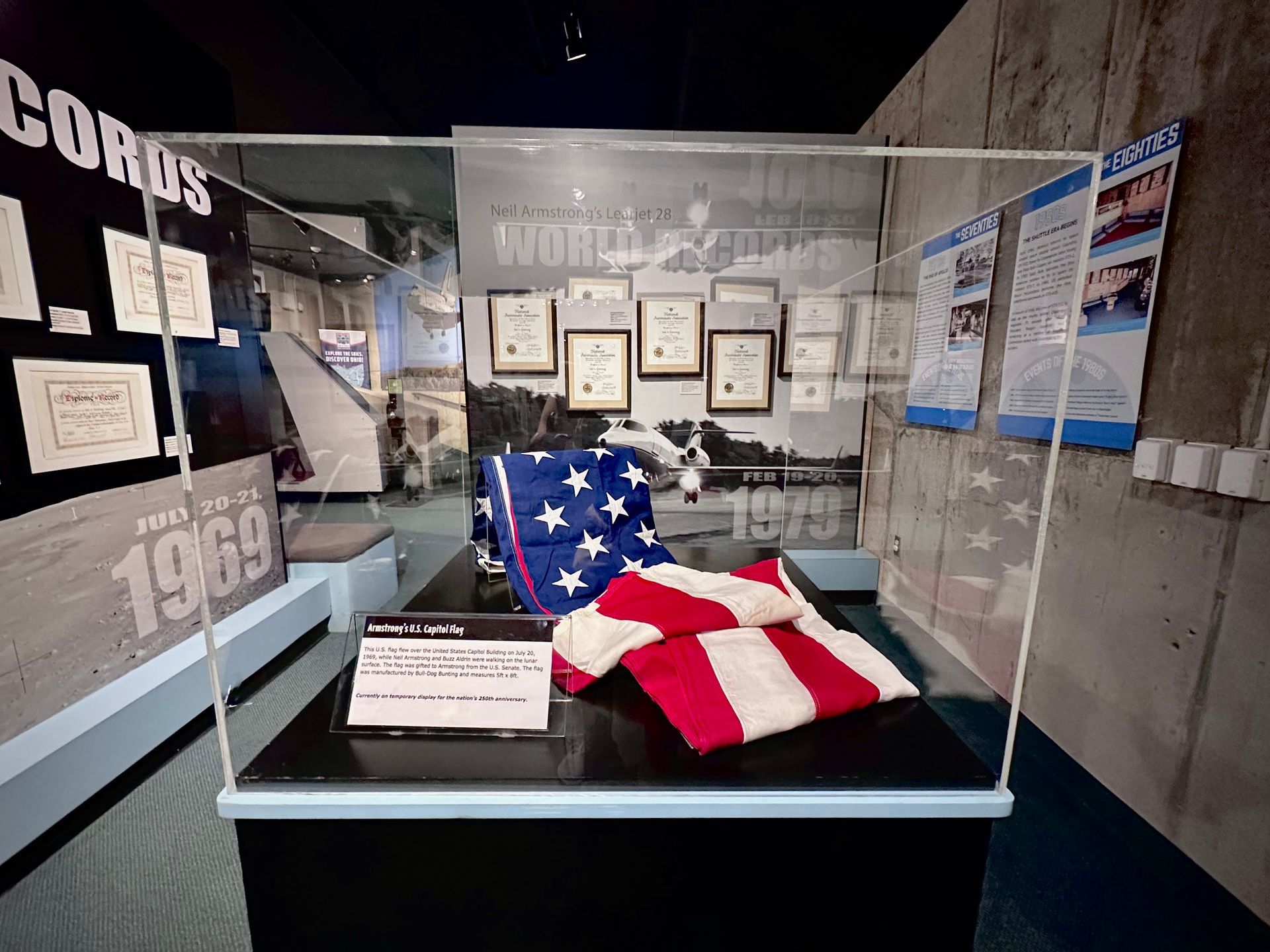
Armstrong was presented a remarkable collection of gifts. U.S. Representative William McCullough of Piqua presented Neil the American flag that flew over the U.S. Capitol while he was on the Moon. Other gifts included a space merit badge from the Boy Scouts, a baritone like the one he played in high school, and an oak-bound scroll with all 7,521 Wapakoneta residents represented. The heaviest gift was a 150 pound (68 kg) bust of Armstrong atop a large wood platform. The very same bust is currently on display at the Armstrong Air & Space Museum.

The festivities concluded at 4:20 PM. A mass exodus from the city began. Bad storms were once again scheduled to pour on the city at 5:30, giving tens of thousands of people only an hour to reach their vehicles and depart the city. The city streets along the parade route, once lined with people, were now lined with leftover waste and debris.
For all its spectacle, Armstrong's homecoming was not the end of his relationship with Wapakoneta. Contrary to rumor, he returned to his hometown many times over the following decades, often quietly and without public announcement. Armstrong appreciated the honor his hometown had given him, but the praise he received that day, he felt, should be directed more broadly, to the thousands of workers and personnel on the Apollo project who made the mission possible. Beyond this, Armstrong knew that none of his work would have been possible if it weren't for the will of the American people.
His overall message to the people that September day went farther than himself, he reminded his hometown that the true celebration was in everyone coming together towards the progress of tomorrow and that extraordinary events can come from the most ordinary of places.

share this
Related Articles
Related Articles